
A Deep Greeting

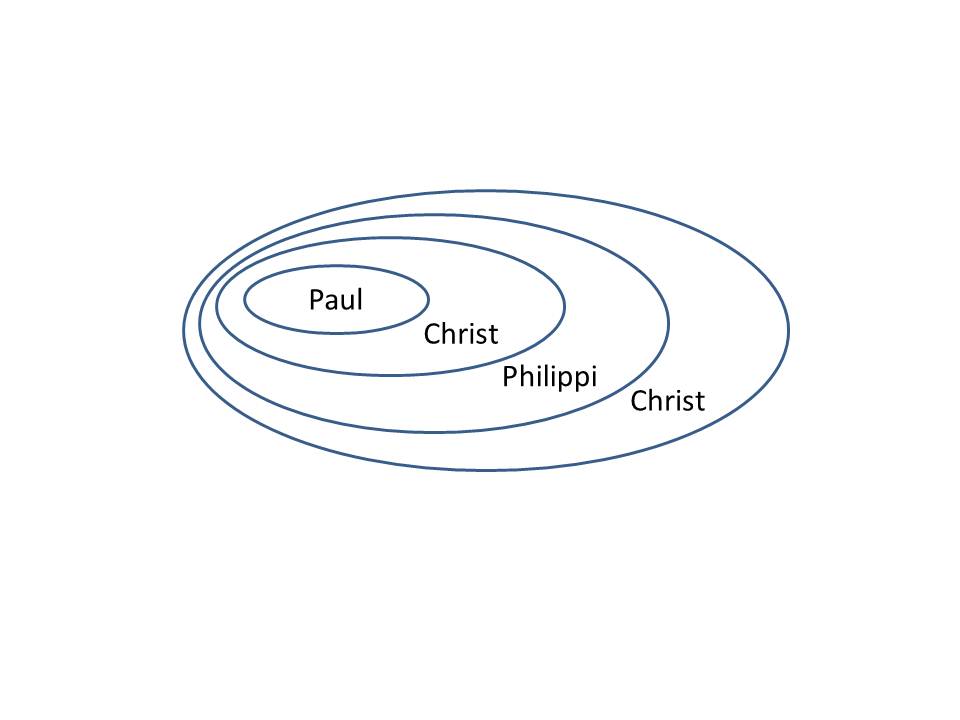
The New Testament book of Philippians is known as a letter of encouragement and joy. Ironically, the apostle Paul wrote this letter while imprisoned in Rome. He opens the book by addressing his listeners as “the saints in Christ Jesus who are in Philippi” (Philippians 1:1, NASB).

Before we delve into the beautiful depths of that greeting, consider the memory Paul had of his founding of the church at Philippi. We read of Paul’s first visit there in Acts 16. After sharing the Gospel and casting an evil spirit out of a young girl, Paul and Silas were persecuted by the authorities and thrown into jail. (Yes, in doing the will of God we can find ourselves in challenging circumstances!) During their ordeal in prison, Paul and Silas chose to worship the God who is bigger than our trials. They sang and praised God after having been beaten with rods and placed in stocks. Our very real God chose to shake the foundation of the prison house and set His servants free. (And yes, God intervenes in the tangible circumstances of life!)

The city of Philippi, then, no doubt brought to the surface many emotions for Paul. he remembered severe and physical persecution on the heels of service to the Lord. He remembered, too, an irrepressible joy that pervaded the very place of pain in which he had resided. Paul surely smiled as he recalled singing to Jesus with a bruised back and restrained in a dark place. The smile arose from a heart that had come to understand the inexplicable joy that erupts when a person chooses to place his life in the protection of Jesus Christ. Chains or no chains – discomfort or comfort – Paul and Silas were shielded by the Savior who lives in their hearts. Defying what circumstantial evidence dictates, the Holy Spirit delivers protection incomprehensible. Trust bubbles over. Joy outruns pain.

Fast forward ten years to the early AD 60’s. Now Paul is imprisoned in Rome under the general persecution of Nero. As a prisoner, he is writing to the church of Philippi where he was ten years ago. Armed with the memory of God’s faithfulness in that Philippian jail a decade earlier, Paul greets his friends this way, “To all the saints in Christ Jesus who are in Philippi.” A deep salutation it is! We Christians today need to claim it as our own. Though we do not live in Philippi, we are the saints in Christ Jesus who are in (insert your own town).

What exactly is a saint? The Greek word behind “saint” here is a word that could be alternately rendered “holy one.” We are saints because we are “set apart for God’s purposes” (the essential meaning of holy). In other words, we are different – and not simply for the sake of being different. We are peculiar because we have been forgiven and made new by the death and life of Christ Jesus. We operate counter to the dark ways of the world. We take the path largely untrod. Our very countenance is noticeably and beautifully strange to the unredeemed, as the light of Jesus Christ shines in us. We operate with different motivation, out of gratefulness and adoration for a merciful God. We are saints, and no one can make a saint but Jesus! Hence, Paul proclaims, “To all the saints in Christ Jesus.”

This point cannot be overemphasized. I am not holy because of what I do; I am set apart because of Him to Whom I belong! Since I am “in Christ Jesus,” I am different. I am in Him; He surrounds me with His presence. As a child in His arms, I rest. As a warrior with Him as my shield, I enter battle. Wherever I am, Christ Jesus is with me, encircling me with His power, and encompassing me with His faithful love.

Since I am “in Christ Jesus,” nothing can touch my life that does not first touch Him! Why were Paul and Silas okay in the Philippian jail? They were surrounded by Jesus! Paul knew nothing invaded His life without first passing through the plan and love of Jesus. Jesus knows our limits and knows the ways in which we need refined. If we are in Him, we have nothing to fear.

Notice, too, these are the “saints in Christ Jesus who are in Philippi.” Is God really with you in the home in which you live? On the road where you walk? In the office where you work? In the hospital where you recover? In the town in which you dwell? Yes! You are in Christ Jesus, and He is quite literally with you geographically. Christ surrounds you, and He also surrounds the place where you are. He is Lord of all locations! (Psalm 24:1)

We are safe no matter where we are or how we are. We are set apart for God’s purposes as we live in Christ Jesus. We must – like Paul – proceed forward in the high calling of God. Experiences and memories of imprisonment did not thwart Paul. Hard times did not dissuade him. As he sat imprisoned in Rome, he wrote those precious words to us, the saints in Christ Jesus who are in (insert town here).


God of the Means and the Extremes

Did you realize that the God who created the earth also created the ends of the earth? Isaiah 40:28 (NASB) says, “Do you not know? Have you not heard? The Everlasting God, the LORD, the Creator of the ends of the earth does not become weary or tired. His understanding is inscrutable.”

If you are just an “average” person in “average” circumstances of life, God’s presence and sovereignty at and over the extremes may not matter much to you. But if, like me, you find yourself at least at times needing God in the extreme and difficult places, His identification as the “Creator of the ends of the earth” bears comforting significance.

God understands the extremes of existence. He is not shocked by problems and sins of all depth and descriptions. No remote or hopeless case exists as far as God is concerned. He fashioned with His own hands not only the earth, but the ends of the earth. The Hebrew root for “ends” means extremity or end. It comes from another word which includes the notion of the border, the outskirts, or the margin. Do you ever feel you are on the margin of the page, instead of inside the story? No fears! God is present even there, for no location exists – physically or emotionally – where the Creator is not the moment-by-moment Sustainer. He is there at the margin.

When I think of the Ark of the Covenant*, that powerful image of the work of Jesus Christ to blot out the power of sin in our lives, I have to think of our God of the extremes. The same Hebrew word used in the aforementioned Isaiah phrase is the term used in Exodus 25:18 (NASB, emphasis mine), “You shall make two cherubim of gold, make them of hammered work at the two ends of the mercy seat.” God intended the image of these magnificent, angelic creatures to loom over the mercy seat from the very edges. God does not tell us the reason, but I wonder if He is beautifully picturing for our simple minds the fact of His merciful covering from one end or extreme of existence to the other. There is no place His mercy cannot go, and even the angels are privy to this compassion and long to see all God does for pitiful humans.

Psalm 139:7-8 (NASB) affirms that God is with us at the highest height (Heaven) and the lowest depth (Sheol or the nether world). Surely, these positions are the extremes. As if to solidify the miracle of His inexhaustible, merciful presence, the Psalmist adds in verse nine, “If I dwell in the remotest part of the sea, even there Your hand will lead me.” I have never plunged the depths of the sea, but I know it can be very dark, cold, and strange in that world, with odd creatures all about. Have you ever been in a dark and cold place, spiritually and emotionally speaking? God is not only in average situations with average people (if any truly exist!); He is in the depths.

Mathematically speaking, a mean is an average. When I take a list of numbers, add them together, and divide by the total number of numbers, I derive an average (or a mean). So, for example, the average of 0, 5, 10, 50, and 10,000 is 2,013. This seems strange, because 2,013 does not reflect well the extreme numbers of zero and ten thousand. Averages – or means – are funny things. Often, in mathematics, they give us little information. Therefore, statisticians prefer more complicated calculations such as variances and standard deviations. The point, however, is simple; average is sometimes an elusive concept and does not always represent the extremes. Do not think it strange if you do not feel average; rather thank the God of the extremes! He is with you at “0” and at “10,000”!

God accounted for the extremities in His plan for the world. I Peter 1:20 (NIV) says of Jesus, “He was chosen before the creation of the world, but was revealed in these last times for your sake.” Jesus agreed to come to this world and die for our sins before He ever laid the foundation of this universe (see also Revelation 13:8). The Creator of the ends of the earth knew He was coming because He “so loved the world” (John 3:16, NIV). Our God saw all the world’s best and worst. He looked down through the annals of time and recognized all the extremes of sin and difficulty, and He still came! Why? Peter boldly declares, “for your sake.”

All of us who have feared that the extremities of our life are too “out of bounds” for God’s help need to pray today and call on the Creator of the ends of the earth.

* For more understanding of the Ark of the Covenant, please visit: www.hopeandpassion.org/?p=759/

Pondering Stephen Hawking’s Statements

I am pondering the profoundly sad conclusions of Stephen Hawking, the brilliant physicist. Although God has given to him a valuable brain, Mr. Hawking has chosen to disregard his Creator and, therefore, His Creator’s unfathomable plan.

As reported by Liz Goodwin on May 16, 2011, at “The Lookout,” a Yahoo News Blog, Stephen Hawking said, “I regard the brain as a computer which will stop working when its components fail. There is no heaven or afterlife for broken down computers; that is a fairy story for people afraid of the dark.” Given all of his scientific musing, I cannot understand why Hawking does not recognize that computers are always the result of design, and so the metaphorical “computer brain” must also be the consummation of design. Humans contrive computers and build them of earth’s content, and the devices stand devoid of soul or consciousness. God created people and the universe out of nothing, and He deposits in His grand creatures, humans, a living soul. A computer shows similarities to a brain (although it is far less superior than the human organ) precisely because the CPU is designed by people whose minds are made in the image of God. God created human minds, and His creatures make computers. Hence, we trace God’s hand in the technology. Computers being the obvious result of intricate human planning, why cannot Hawking see that human brains must also be the result of intricate divine planning?

Of course there is not an afterlife for broken down computers . . . because there is no “now” life for computers. Mankind alone received at creation the “breath of life” from God. However, the “human computer,” as Hawking may like to refer to it, has life now. People (and their minds) were made to live. God has prepared for them an afterlife. Evidenced throughout history is man’s innate desire to live. Always, people have generally had a great aversion to death. Carlos Eire (2010) quotes Pierre Chaunu,

    The death of any human being is an outrage; it is the outrage par excellence, and all attempts to diminish this outrage are contemptible, no more than opium for the masses . . . Death is the unacceptable. The annihilation of one memory cannot be compensated for by the existence of the universe and the continuance of life. The death of Mozart, despite the preservation of his work, is an utterly evil thing. (p. 1)

Even the atheist philosopher, Bertrand Russell, admitted to a need for “safety” regarding annihilation. As Eire (2010) also quotes Russell, “Brief and powerless is Man’s life; on him and all his race the slow, sure doom falls pitiless and dark. Only within the scaffolding of these truths, only on the firm foundation of unyielding despair, can the soul’s habitation henceforth be safely built” (p. 14). Eire then adds his own thought, “Safety in despair: if that is not a leap of faith, nothing else is” (p. 14).

We humans long for eternity because we were made by an eternal, transcendent God. The Bible declares, “[God] has made everything beautiful in its time. He has also set eternity in the hearts of men; yet they cannot fathom what God has done from beginning to end” (Ecclesiastes 3:11, NIV). Having been made in God’s image (Genesis 1:26), we have a slight grasp on eternity – we sense it and we long for it. When we call on the God of the Bible for salvation, He grants to us eternal life. While we cannot yet know the experiential reality of that fact in its fullness, we begin to operate in a hope that “blows our mind.” One day, when we stand in the presence of our Creator, the perfect will come, and the partial will be done away (I Corinthians 13:10). We will begin to see clearly the amazing, true nature of eternity. For now, we trust the “imperishable seed” that has been planted in us through the Word of God (I Peter 1:23, NASB).

As far as heaven being a “fairy story for people afraid of the dark,” I am not so much scared into Heaven, as I crave what I know is the greater reality. Just because the idea of everlasting life in a perfect place seems too good to be true does not make it untrue. In this life we often say, “[This or that] is too good to be true” because this world is, in fact, a sinful mess. We find ourselves held within a realm of brokenness and incompletion because of sin. We must believe in and live for a home of righteousness that is infinitely greater than the present universe in its collective state of rebellion against God in order to realize what is actually “not too good to be true”! Ironically, genuine fear should come into the picture only when dealing in damning reality, not made-up tales. What should justly haunt humans is the very real existence of Hell, a place of complete separation from God and all that is right. Heaven is not a fairy tale, and Hell is to be feared.

When Stephen Hawking was asked what humans should do to lend meaning to their lives since we are all destined to power-down like computers, Hawking said, “We should seek the greatest value of our action.” This is the point that confuses me the most. If, as Hawking posits, nothing of our existence survives the death of the body, the value at its highest point evaporates. For, no matter what earthly good someone achieves – whether medical advances for the sick, accruement of great wealth for family, the provision of more entertainment for bored masses, the enhancement of personal rights, or any other earthly thing – all of this comes to naught quickly for both the one who acts and the one who receives. The paradigm of the atheistic person leaves no room for anything lasting in the case of any individual person. The “greatest value” of any action amounts to nothing in just moments, hours, days, or years.

On the other hand, the simplest of obedient acts for the sake of Jesus Christ and His kingdom leads to the proliferation of eternal things. When I deal in eternal investments – prayer, human conversations, study of the Bible, kindness to others, generosity reflecting God, teaching others of His Truth, etc. – I get a return on my action that is currently unimaginable to me. The greatest value is not any finite amount, but rather an infinite reality. Matthew 6:19-20, II Corinthians 4:16-18, and I Peter 1:4 are just a few of the places in God’s Word where the reality of eternal investment is made clear.

Stephen Hawking has great knowledge of math and science. Sadly, he has suppressed the truth. I say this standing on the authority of the Word of God. Romans 1:18 makes clear that those who reject God and His Gospel are those who actively “suppress” or “hold back” the Truth. Truth is in front of us, revealed generally, through all God has made (Romans 1:20); and it is available especially to all who cry out for it, as Jesus is the Truth (John 14:6). He stands ready with His Word to answer those who will quit pushing back, with tired arms, the obvious Truth. I pray even Stephen Hawking responds to His Holy Creator and is made new by Jesus and fit for Heaven – the place that is not too good to be true (II Corinthians 5:17 and Revelation 21:1-5).

Reference: Carlos Eire, A Very Brief History of Eternity (Princeton, NJ: Princeton University Press, 2010)

What About Your Legs?

God made both horses and humans. In fact, after creating this celestial orb and its creatures, God commanded humans to “Be fruitful and multiply, and fill the earth, and subdue it; and rule over the fish of the sea and over the birds of the sky and over every living thing that moves on the earth” (Genesis 1:28, NASB). Our Lord delights in His own creativity, and He is watching the crown of His creation – people – employ their intelligence and strength in harnessing the creation for God’s purposes and enjoying it to His glory, just as He dictated.

I take pleasure in watching colorful birds fly through my yard, and I know many people who marvel at the beauty of horses. Once I was captivated by the vibrant patterns of a simple caterpillar. No doubt, God is pleased with His myriad, marvelous works. After all, He boldly declared, “It is good” after each step of His creation act.

So what does the Psalmist mean when He informs us that “[God] does not delight in the strength of the horse; He does not take pleasure in the legs of a man”? (Psalm 147:10, NASB) The context makes clear that our Lord finds no joy in any part of His creation that is not properly yielded to Him; for as His creatures align rightfully under His sovereignty, then do they find favor with their Maker. In other words, though God made both the horse and the man, neither can delight God while opposed to God’s will. Man was made to obey God, and horses (for example) were made for man’s enjoyment and use, in alignment with righteousness. When a man or woman depends on the strength of a horse, or the size of a 401(k), or the results of blood work, or the influence of a career promotion, or the measure of an IQ, or the strength of his or her own body/will; that man or woman is out of line with God’s heart. God Himself takes no pleasure in the strength of the horse or the legs of a man.

Rather, the Psalmist goes on to say, “The LORD favors those who fear Him, those who wait for His lovingkindness” (Psalm 147:11, NASB). Although I exercise quite regularly, I cannot give in to the cultural tide. A fit body does not the woman of God make. Although a man may climb far up the career ladder, a powerful position does not the man of God make. A human being is favored by the Mover and Shaker of the universe when he fears the Lord and patiently places all his hope on the mercy of God. No matter how strong the horse we ride or the legs that carry us, our only hope is that God has everlasting pity on us when we honestly recognize Him for who He is. When we reverence God, He will show us His kindness – first in the sacrifice of Jesus for our sin, and second in the expectation of all good things according to His grace. (Romans 8:31-32)

It is certainly wise, as long as we are able, to treat rightly the body God has given us; for it is His temple (I Corinthians 3:16). However, the temple is made for worship! The heart inside the temple needs to be in proper posture, one of reverence and hope in God’s kindness. Our feeble attempts to outrun tragedy or speed ahead of troubles are most certainly in vain. It is God alone whose favor compels the world and all its powers to work on our behalf as He sees fit. If my Lord wants me out of the pit, it is His power that shall lift me! My contribution is my genuine gaze into His eyes as my heart cries out, “I am waiting for your kindness, God!”

We know that God can delight in not only the legs of man, but the very feet of him. The prophet Isaiah declared, “How lovely on the mountains are the feet of him who brings good news, who announces peace and brings good news of happiness, who announces salvation, and says to Zion, ‘Your God reigns!'” (Isaiah 52:7, NASB) Though our feet may be tired, dirty, and lowly depending on where we are in the journey, our feet are beautiful in the sight of God when we bring the good news of salvation to a dark and dying world.

What about your legs? And your “horse”? Is God delighted or disappointed? Are we depending on our strength or God’s kindness? Are we running to win for the sake of pride, or are we standing on the mountain of life proclaiming God’s plan for the sake of His glory?

As I write, I am now thinking of those among us who may have diseased feet, weakened legs, or no limbs at all. Remember that God favors the heart’s position, not physical or intellectual drive. Even if you have no legs, God pours His kindness on you as you look to Him. One day, you will have a right body because of His mercy! Amen!

Living in Heavenly Places

A recent, sweet conversation with my nephew reminded me of our access to all spiritual blessings of the heavenly places (Ephesians 1:3). My nephew assured me that he remembered vividly a ten minute period of time that occurred eight years ago. He recalled the place we were during a moment of emotional distress and the words I spoke from the Bible concerning the New Heavens and New Earth. That precious boy’s eyes lit up as he listened to me review that conversation of long ago and my counsel that Jesus will keep His promise to make things right so that one day people who love each other will no longer have to be separated. As we remembered together, I could see the wheels of his mind turning furiously. He had held onto the truth of God’s Word all this time. For him, the book of Revelation and II Peter had been sealed as reality.

What struck me the evening of our recollection is the power of spiritual blessings. When we focus on and access the stuff of God’s Word and kingdom, eternal and life-changing phenomena occur. Though much of the time the drudgery of everyday living can mask the workings in the spiritual realm, God moves through us when we choose to think and act in the heavenly arena. For example, I just encouraged a friend of mine who uses the text message medium to send Bible verses to others. In a world of technological overuse and abuse, I wanted her to know that often the Lord confirms His leading through her “heavenly thinking” when it comes to such a common thing as text messaging. This woman accesses the spiritual blessings of God’s Word, chooses to think about her Savior during the course of ordinary days, and then positively affects another person’s walk with the Lord. Eternal differences are made rather than just the proliferation of more gibberish so common to texting.

Paul instructs in Ephesians 1:3 (NASB), “Blessed be the God and Father of our Lord Jesus Christ, who has blessed us with every spiritual blessing in the heavenly places in Christ.” How many times do we miss those spiritual blessings simply because we do not recognize our position in the heavenly places? A dinner table in a restaurant, for example, can be a heavenly site when food and laughter are shared and savored to the glory of God. Our Lord made us to enjoy the earth He has created, and we reflect His image in holy fellowship with one another. The location on the map is one thing, but children of God are seated in heavenly places (Ephesians 2:6) and allow God to transform the ordinary into the extraordinary.

A year or so ago, one of my young relatives expressed the need for some school clothes that fit well. I went to a department store and a drug store and stocked up on clothes and supplies for him. I felt the glory of God in those stores, because the act of obedience was in the spiritual realm. The clothing became a tool for Heaven. I wrote a letter to go with the supplies and outfits, and I explained that all of our needs are ultimately supplied by Jesus. He is the reason and the source of all we receive. Clothing a loved one became sacred.

How often do we waste our time stuck in the ordinary? God has blessed us with every spiritual blessing! He tells us these blessings are in heavenly places in Christ. Make no mistake about it, a New Age type of spirituality is not what is mentioned here. We have access to the blessings because of – and in – Jesus Christ! We used to be dead to spiritual things, but the sacrifice of Jesus made us alive! (Ephesians 2:4-5) Now we ought to live – and live abundantly! A bird flying through the yard now reminds us of the freedom from sin we have in Jesus. The simple acts of reading and thinking now remind us of the creativity and orderliness of our great God, who has things yet unimaginable in store for us. A drink of iced tea reminds us of His faithfulness to quench our spiritual thirst and bring contentment even now. A look at the tall trees stretching toward the sky, growing more intricate with each expanding branch, hints of our approach toward Heaven and the New Jerusalem.

Please live in heavenly places in Christ. Be always communing with Him and ponder His Word (Psalm 1:1-2). Be perpetually giving Him glory as we stand amazed at all He has given and all he does. Make moments and experiences count for eternity. We have been blessed with all spiritual blessings; we have to live in heavenly places in Christ.

Swordtails and God’s Sleeve

When I was in middle school, I had an aquarium full of tropical fish. One of my favorite types of fish was the orange swordtail. The difficult part of adoring these particular creatures is that their young are born live, and the adult fish eat them. In order to protect the precious little baby fish, I would have to separate the fry in a rectangular net on one corner of the tank. Catching the tiny, agile babies is not easy.

The fact is that I had to get personally involved in the protection of the new swordtails. When one of the females was pregnant, I knew I had to get off the school bus quickly and run into the house to check on the situation each afternoon. I certainly could not design an eye-catching poster to hold up in front of the aquarium that warned, “Swim behind the castle little fish . . . swim!” Fish cannot read. It was pointless to kneel down in front of the tank and yell loudly, “Hide behind the plant . . . hurry!” Fish cannot hear us. The only way to help the swordtail babies was for me to roll up my sleeve and dip my arm into the sometimes algae-ridden water full of slimy fish and all their waste. Yes, if I was to save the fry, I had to invade their world.

Similarly, God crashed into our world to save us. When we were overcome by our sin and had no way to escape the curse, our God entered this space/time continuum. We are helpless without His personal intervention. He rolled up His sleeves, and entered a world of pain, sorrow, and mess to rescue us by His own hand. He put on human flesh and endured all the discomfort and longing earthly life brings. Then – in one particular season of time – He suffered more spiritual, emotional, and physical pain than we could ever imagine, as He willingly took on the sin of the world at the Cross. With His own body – with His own being – He saved us.

The great prophet Isaiah asked, “Who has believed our message? And to whom has the arm of the LORD been revealed?” (Isaiah 53:1, NASB) What poignant words! What critical consideration! All of life boils down to this . . . do we believe the message of the God who revealed His own arm in the mission of saving us? This question is paramount, for its answer differentiates biblical Christianity from all other religions and worldviews. Whereas the various religions of the world involve the work of humans to one degree or another in their salvation, true Christianity says that God saves – and the rolling up of our own sleeves is useless. His holy, strong arm is the one that redeems us from the pit of sin and hopelessness.

I can see the devil and the powers of Hell shaking in their boots as God Almighty begins to roll up His sleeve! Jesus, the God-Man, comes to redeem His people! As the tiny swordtails were placed safely in the net by my own hand, so we are drawn out of the kingdom of darkness and placed safely in the kingdom of God by God’s own hand.

The question is, “Do you believe this message?” The Hebrew word for believe in Isaiah 53:1 is the root from which we get the widely used term, “Amen.” Belief means that we truly agree. We stake our very life on it. We hear the message and we say, “So be it!” It is right! The arm of our strong and gracious Jesus has been revealed! When He rolls up His sleeve, I am safe!

What the Stars CAN Tell Us

God is asking you, “To whom will you compare me? Or who is my equal?” (Isaiah 40:25, NIV) God provokes us to consider just how influential we deem to be situations, people, and powers. God lovingly but firmly confronts us with the possibility that we are living as though He has a rival.

Do we fear an employer’s attitude or decision? Do we stay awake at night wondering how a financial situation will affect us? Are we uncomfortable because we think some power of Satan is intending to wreak havoc in our life? Are we debilitated by dread of how a health issue will impact our existence? Do we spend an inordinate amount of time wondering what an unknown circumstance may bring? If so, then we are living as though that situation, person, or power can go to battle against God’s will for our life and perhaps win! In other words, we are affirming that God Almighty has an equal – at the very least. Maybe we are living as though He has a superior.

In fact, God stands sovereign over all creation. Every human, every power, and every state of affairs is dependent on Him for existence. Nothing stands a chance against God. When we live in fear or distress of situations, authorities, or people; we are living in idolatry. The first commandment God gave to Moses on Mount Sinai is “You shall have no other gods before me” (Exodus 20:3, NASB). Although a well-known requirement, I sadly believe many of us transgress this law in our intellect and heart rather regularly. When we dedicate time, thoughts, and passion to the dread of anything in life – rather than to an honest reverence to God – we are designing an equivalent for God in our own mind. We are committing idolatry.

The antithesis to this sinful, destructive line of thinking is a focus on both the greatness and intimacy of God. Isaiah 40:26 (NIV) goes on to say, ” Lift your eyes and look to the heavens: who created all these? He who brings out the starry host one by one, and calls them each by name. Because of his great power and mighty strength, not one of them is missing.” He is grand enough to have created the billions and billions of stars and the vast expanse in which they reside, but tender enough to know each one by name and ensure each is sustained on a moment-by-moment basis just as it should be. If God does this for giant, burning balls of hydrogen and helium; what does He do for living people with souls, made in His own image? On this illustration given in God’s Word we ought to depend in order to avoid the sin of idolatry.

God is transcendent – above and beyond us and our understanding, and wholly self-sustaining. However, God is also immanent – very close to His creation. His greatness does not preclude His intimate care! Hallelujah! The most wonderful, infinite, inexplicable, and Creator God knows my name and every circumstance that touches my life. For that reason, I should make none His equal.

Let us aim to obey God by putting Him above all else in thought, devotion, time, and respect. May we realize He is to have no competitor when it comes to that about which we ponder, obsess, believe, treasure, work toward, dream, and expend time and energy; for, the answer to the question, “Who is like Him?” is “No one!”

*For more reading about God’s transcendence and immanence, see Acts 17:24-28.

Why Doesn’t God Do Something?

I had the recent privilege of sitting with a young lady after I had preached the Word of God at a women’s event. The woman was crying, and she told me she was angry. After having endured the drug overdose death of a friend and having witnessed the neglect and disability of children, she wanted to know, “Why doesn’t God do something?” She added, “Why does God not hear the cries of people?”

We sat for some time as I listened and shared. Our productive time ended in sincere prayer and led me to think through more thoroughly the Bible’s clues to what God is doing; because, my friends, He is doing something, and He will do something. Our human inability to see and understand it all does not negate the reality of a supernatural God’s working.

First, God sees what happens. “The LORD looks from heaven; He sees all the sons of men; from His dwelling place He looks out on all the inhabitants of the earth, He who fashions the hearts of them all, He who understand all their works, ” declares Psalm 33:13-15 (NASB). God is fully aware of the good and bad deeds of all people. He is cognizant of every pain suffered, every injustice endured, every sin committed, every oversight, every evil scheme, and every disappointment. He takes it all into account. In fact, I was recently encouraged while reviewing Bible passages I have memorized. I came to Ephesians 3:17 (NASB) and was reminded it is God’s desire that “Christ may dwell in your hearts through faith.” Christ dwells in my heart! He is right there in the mix with all the emotions I experience! Of course He knows exactly how I feel. Of course He is paying special attention to all the feelings of His people! He understands the works of all people, and He dwells particularly in the midst of His children’s hearts.

Second, God is waiting to bring final judgment. Although it does not appear that God is correcting wrongs and answering desperate pleas, He will act one day with finality and accuracy. For now, He is waiting because “[He] is patient toward you, not wishing for any to perish but for all to come to repentance” (II Peter 3:9, NASB). God’s judgment of the horror of sin and its effects is so terrible, so final, and so unimaginable that He wants to ensure all have had a chance to repent and turn to Him. Please do not be disturbed by the unimaginable nature of His judgment, for you know the indescribable horror resulting from sin throughout the centuries. The judgment is commensurate with the gravity of sin. Somehow, God’s waiting provides a way for all to have opportunity to repent before facing God’s wrath.

Third, the judgment lies on the other side. The essence of Biblical Christianity is faith. Hebrews 11:6 (NASB) proclaims, “And without faith it is impossible to please Him, for he who comes to God must believe that He exists and that He is a rewarder of those who seek Him.” Faith declares that God’s people will be rewarded – on the other side of death. Likewise, Revelation 20:13-14(NASB) states, “Death and Hades gave up the dead which were in them; and they were judged, every one according to their deeds. Then death and Hades were thrown into the lake of fire. This is the second death, the lake of fire.” Faith also declares that God’s enemies will be punished on the other side of death. While we reap natural consequences in part in this present world, precise and comprehensive judgment and reward takes place at another time.

Do you believe this? Can you affirm what Paul said in I Corinthians 13:12 (NASB), “For now we see in a mirror dimly, but then face to face”? Do you believe that the next world is the right world? (II Peter 3:11-13, Revelation 21:1-5) Do you believe that the God who made everything out of nothing actually has a New Heaven and a New Earth to follow an accurate and final judgment? Do you believe that the omniscient God of the universe can sort out the rights and wrongs of every human heart? Do you believe that He will serve justice because He is – by His very nature – just?

If you believe these things, then you will be most miserable unless you also believe that Jesus Christ stands waiting to absorb your guilt! As I counseled that sobbing young lady, allow me to tell you that you also can “throw your sin on Jesus, because He can handle it; you cannot!” II Corinthians 5:21 (NASB) says, “[God] made [Jesus] who knew no sin to be sin on our behalf, so that we might become the righteousness of God in Him.” Only an infinitely powerful and completely holy God can handle our sin. We cannot pay for it. We cannot hold it inside. If we do not take it to God now, then He will judge us later. Sin demands payment. An infinite, holy God can absorb that sin in one, finite moment of time (just as He did on the Cross). On the other hand, a finite, sinful human being could never pay for his or her own sin. A person would have to go on forever, in complete separation from God without ever finding rest or resolution for the sin problem. Hell is as logical as Heaven, and both lie on the other side.

God has done something, He is doing something, and He will do something. Trust the work of Jesus on the Cross two thousand years ago as payment for your sin, assist God in the mission to see others repent while we await the final judgment, and – finally – hope in the realities of the other side!