
Jesus, Why Did You Let Your Friend Die?

“Lazarus has died, and for your sake I am glad that I was not there, so that you may believe.” – John 11:14 (ESV)

Some of the most difficult words in the Bible to wrap our minds around are these words of Jesus Christ to His disciples, “Lazarus has died, and for your sake I am glad that I was not there, so that you may believe” (John 11:14, ESV). Yes, Jesus actually implies here that He was pleased that Lazarus died before Jesus went to him to heal him. In fact, the word Christ used for “I am glad” is the same word translated as “rejoice” in Philippians 4:4 (ESV), “Rejoice in the Lord always; again I will say, rejoice.”

Jesus purposefully allowed Lazarus to die – to cross that dark chasm between this world and the next – and to face his earthly body’s demise. We ask, “Why did you do that, Lord, when the sisters of Lazarus both told You he was ill?” They sent word directly to You. They turned to You. They asked You to intervene. They even reminded You, Jesus, of how much You cared for Lazarus when they said, “Lord, he whom you love is ill” (John 11:3, ESV). And God, You confirmed Your love in John 11:5 (ESV), “Now Jesus loved Martha and her sister and Lazarus.” So, why? Why the seemingly disturbing words of John 11:6 (ESV), “So, when [Jesus] heard that Lazarus was ill, [Jesus] stayed two days longer in the place where he was”? God, why did you hesitate? Knowing a man you loved was suffering and about to die, why did You not run to Him? Or why did You not heal him from a distance as You did the official’s son of John 4:46-54? Lazarus was clearly Your friend, but You allowed him to suffer and be put in the grave.

In God’s economy, something is obviously more valuable than immediate healing or relief. In His scheme of things, Jesus deemed His hesitation to heal more valuable than the expected answer to prayer. He saw a greater glory. He looked beyond what eyes can see and what minds tend to perceive. He calls us – in this situation – to look to a place much deeper than comfort or human expectation. God calls us to an economy of souls and eternal realities. Christ made clear two reasons for His refusal to heal Lazarus before his first experience with death: 1) the increased belief of His disciples, and – more broadly – 2) the glorification of God and the Son of God.

When all was said and done, we discover that many people came to believe in the Son of God as a result of Jesus finally raising Lazarus from death. In fact, some of the people who came to a place of belief were the very Jewish friends who had gone to the tomb to weep with Mary and console her (John 11:31, 45). In other words, the people who had been carefully brought by God to a place of grief and somber reflection were now face-to-face with the Giver and Re-Giver of Life! Would these mourners have been receptive to healing from sickness only (as Jesus had performed many times)? Or was it their confrontation with the finality of death and its icy grip that was necessary for eternal belief? When Jesus decided to delay His arrival at the home of Lazarus, was it really because He knew an encounter with death was the only way for some to behold the Author of Life? Was it really Christ’s love for the eternal souls of men that drove Him to allow His beloved friend, Lazarus, to pass through the veil of death?

You see, only if the Son of God is glorified – or seen for Who He really is – will men and women find eternal life. God’s glory is our salvation! While some mistakenly believe God to be selfish for demanding to be glorified, He is actually working in our best interest. We were designed for real life beyond the grave. We were made to be resurrected at the Return of Christ and to live forever on the re-created earth and in the new heavens. At the time of the sickness of Lazarus, perhaps Jesus had in mind to walk with these Jewish friends of Mary someday in a place vanquished of mourning, pain, illness, mistreatment, separation, misery, and death. Perhaps Jesus knew that His dear friend, Lazarus, could handle illness, disappointment, and earthly death because Lazarus valued eternal life the most. Perhaps Lazarus is in Heaven now rejoicing with all the men and women who entered their eternal home because of his first encounter with death and subsequent resurrection. Perhaps both Jesus and Lazarus reckoned temporary suffering linked to saved people as more profitable than temporary relief linked to lost people.

Here is something to think about: though Lazarus was raised from the grave on the fourth day after dying, he still had to die an earthly death again. For him – as for us – eternity is the real hope. So, when Jesus says to your request, “I will wait a little longer,” what will your response be? To be desperately disappointed? Or to realize He is working a plan aimed at His glory so that human beings can be given what we do not deserve – forever to thrive in unmitigated perfection?
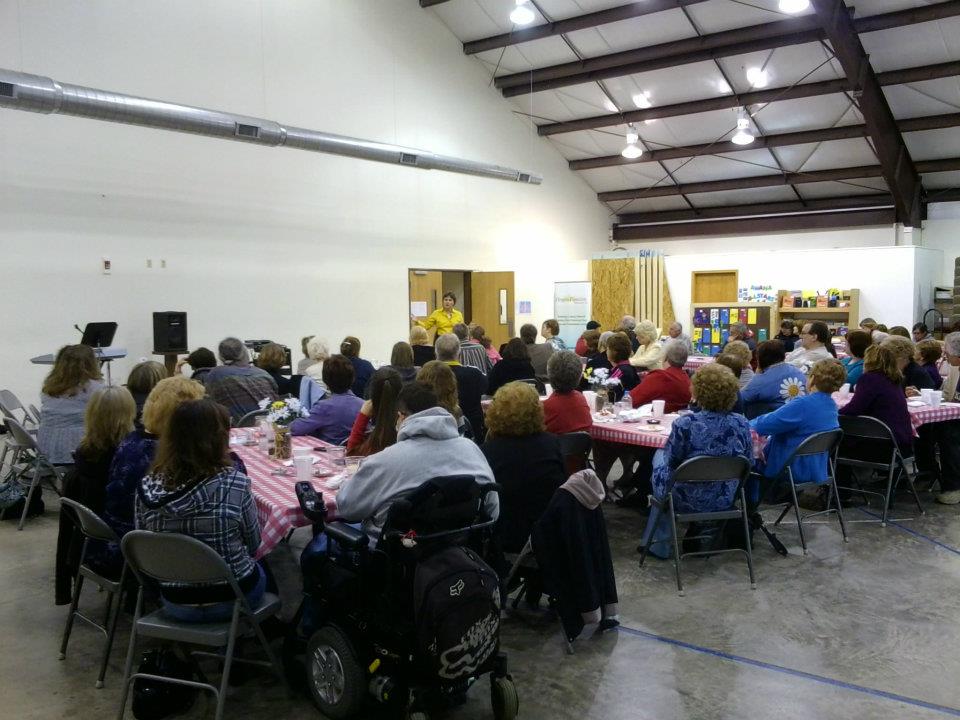

Gospel Alliance Luncheon

Hope & Passion Ministries travelled to Pricedale Union Church (sponsored by Gospel Alliance of Charleroi) on Saturday, April 28 for Shelli to present a message from Psalm 103: “Is God Your Benefit Provider?” What a tremendous time of worship and the Power of the Word of God! Thank you, Jesus!

Gospel Alliance Luncheon

Hope & Passion Newsletter – April 2012

Click on the link below to view Hope & Passion’s latest Newsletter for April 2012. You won’t want to miss reading the introduction to Shelli’s 2nd book, about to be released in June, entitled . . . “Living in Awe!” Plus, there are many exciting upcoming events that you will want to be sure to mark on your calendars so you don’t miss out!

If you are not on our regular e-mail or mailing list to receive Shelli’s devotions, information about upcoming events, and Hope & Passion’s newsletters, please get in touch with us by e-mailing us at hope.passion.ministries@verizon.net.

Hope & Passion Newsletter – April 2012

Shelli’s Latest Podcast: WAR ZONE

AUDIO LINK TO SHELLI’S LATEST MESSAGE:

Just how real are spiritual battles? To what are we called when it comes to “the fight”? How serious is this whole thing? How will Jesus culminate the victory one day? Attached is the AUDIO link to Shelli’s latest message taken from II Timothy 2:3-4 entitled: WAR ZONE: Getting to the heart of our role in this cosmic battle.

To hear this deep, powerful, and convicting message, click on the attached link to play the audio entitled “War Zone”:

War Zone – 04/22/12

Does God Groan Too?

“In the same way, the Spirit helps us in our weakness. We do not know what we ought to pray for, but the Spirit himself intercedes for us with groans that words cannot express.” – Romans 8:26 (NIV)

I am not ashamed to admit that, at times, I groan. From deep inside, wells up a feeling of discontent, of longing, of incompletion, and of frustration. God made me to revel in all His glory, but my broken, sinful state keeps me from complete satisfaction. Something is not quite right, and the deepest part of me knows it is so. Therefore, I groan.

God tells us in Romans 8:22 that the entire creation is in a state of uneasiness. The universe itself knows something better is around the corner and that the current state of affairs is difficult. And so it follows that Romans 8:23 (ESV) declares our predicament, “We ourselves, who have the firstfruits of the Spirit, groan inwardly as we wait eagerly for adoption as sons, the redemption of our bodies.” Did you catch it? We are saved, but our final completion is on the horizon. God is going to make these sin prone bodies new someday! Until spirit, body, and universe are totally remade by Jesus, we are in a condition of unrest. Hope is in us – but not fully realized. We live between the tension points of what is and what will be.

Enter in one of the most beautiful revelations of the grace of God. We are groaning right along with creation because of the yet-to-be nature of salvation. We long for sin to be knocked down, for Satan to be consummately defeated, and for all the nasty effects of sinfulness to be eradicated. As we do, we sigh. Our hearts ache. And what does God do? Romans 8:26 (NIV) promises, “In the same way, the Spirit [of God] helps us in our weakness. We do not know what we ought to pray for, but the Spirit himself intercedes for us with groans that words cannot express.” Such love!” I groan; so God groans too!

Clearly, God’s Spirit is interceding for us Christians with groans that no words can accurately interpret. When we do not know how to pray, we need to just go to God with outstretched arms, bended knee, and a simple cry. When we have no words, God has groans. He knows our hearts and circumstances completely – to the smallest detail. (Psalm 139:1) There
are times when God just wants us to yield our confused minds and broken hearts to Him without trying to tell Him what needs to be done. God does not need our advice, but He desires the sincere confession of our insufficiency. Amazingly, God enters into our groaning; He takes on our well-founded discontent with the world as it now is. He does not have to identify with us, but He chooses to. Mysteriously, God decides to groan through us when we humbly ask His Spirit to intervene.

Romans 8:26 begins with the fact that God’s intention during this type of prayer is to help us in our weakness. Amazingly, the Greek root behind the word “weakness” here implies six things; as outlined below:

    1. God helps us with our native frailty of body. I grow tired and discouraged as I come to the end of a day and as I grow older. God is there – by the power of sincere prayer – to help me gain the strength I need to live with a body that is weak and limited.
    2. God helps us in our feebleness of health and in our sickness. When I am frustrated by illness of a temporary or chronic nature, God’s Spirit groans through me for both healing and the power to wait for healing as God works His good through my affliction.
    3. God helps us to understand or grasp things currently misunderstood. My brain has weakness, and I need the Lord to supernaturally guide my intellect. His Spirit grants me wisdom I could not gain on my own.
    4. God helps us to do things great and glorious. I often feel my contribution to life is small or insignificant. In groaning prayer, God helps me to recognize the eternal value of my efforts in Him. He grants me perseverance and fresh ideas in order to do the important work of His kingdom in daily living.
    5. God helps us to restrain corrupt desires. When I sincerely yield my heart to Him, the Spirit gives me what is necessary to refuse sin and pursue God’s glory in every circumstance. He promises there is no temptation that I cannot escape with His nearness and help.
    6. God helps us to bear trials and troubles. Until the day Jesus makes all things right, we suffer in this life. Trouble comes. Meanwhile as we allow God’s Spirit to intercede for us in prayer. We are given the endurance necessary to make it until that new day. Supernaturally – and without fail – God gives His children the strength to go on despite difficulty and distress. His power is greater than all we face. His hope is more substantial than all discouragement.

As you can see, God’s entrance into our deep groaning to help us in our weakness is all-encompassing. Covering every base, God assures us of all we need when we agree to run to Him, admitting our desperation, and curbing our desire to tell Him what to do. Instead, we allow God’s Spirit to groan to the Father on our behalf. Then we are assured of right outcomes for “the Spirit intercedes for the saints in accordance with God’s will” (Romans 8:27, NIV).

Ladies Encounter Promotional Video – September 18, 2012

Please take a few minutes to watch Hope & Passion’s first promotional video made for our upcoming Ladies Encounter event being held in Altoona, PA on September 18, 2012. Shelli will be speaking on the topic “Messy to Glory.” All ladies are welcome to attend this free event. No RSVP is needed.

Link to Ladies Encounter Website: http://www.ladiesencounter.com/Upcoming_Events.html#Fall_2012

Two Bloody Robes Tell the Story

And they stripped him and put a scarlet robe on him. – Matthew 27:28 (ESV)

He is clothed in a robe dipped in blood, and the name by which he is called is The Word of God. – Revelation 19:13 (ESV)

The scene immediately preceding the crucifixion of Jesus is heartbreaking and gruesome. It ought to be deeply pondered by every person to let its reality sink in. And then, one incident in particular needs to be tied to its victorious outcome. The scene at the end of God’s Word – in the book of Revelation – is both a fitting, glorious conclusion and a sobering, devastating reality. To those who truly apprehend and order their lives according to real faith in Jesus Christ, the theme traced from the first century to the end of earthly history is one of mystery and majesty. To those opposed to the Christian Gospel, the theme – while perhaps scoffed at – is, in truth, the greatest reality with which one must deal.

Let’s travel from the first century to the end of time using one, simple thread. We shall see things quite easily as we stick to one part of both accounts – a robe. Though countless details exist, let us focus on this one component in order to cut to the heart of what is both similar and different about two historical events, one of which is yet to take place.

In the first scene, Jesus has been arrested, Judas has committed suicide, and Pilate has delivered Christ to be crucified. After Jesus was beaten, the governor’s soldiers began a mockery of Jesus. Matthew 27:27-31 (ESV) records the grievous details:

    Then the soldiers of the governor took Jesus into the governor’s headquarters, and they gathered the whole battalion before him. And they stripped him and put a scarlet robe on him, and twisting together a crown of thorns, they put it on his head and put a reed in his right hand. And kneeling before him, they mocked him, saying, “Hail, King of the Jews!” And they spit on him and took the reed and struck him on the head. And when they had mocked him, they stripped him of the robe and put his own clothes on him and led him away to crucify him.

Note with me, please, the first action of scorn the soldiers pursued: the placement of a scarlet robe on the beaten, bleeding body of Jesus. This robe was part of a greater scheme to belittle both the Person and the claim of Christ. The main point of contention here is the perception by some that Jesus was the King of the Jews. The soldiers would taunt Jesus concerning His real identity. Apparently believing Him to be a fool instead of royalty, they gave him a robe, a crown of thorns, and a reed for a staff. Then they knelt before Him in disdain, mockingly calling out, “Hail, King of the Jews!”

Can you imagine Jesus Christ, bleeding on his back and sides beneath that robe and bleeding on His head from under the crown made of thorns? Can you envision Him holding a reed for a scepter as the soldiers spit on Him and rail at Him in hatred? Poor Jesus! How our human hearts ache at the thought of the misery and shame He endured. And yet, what makes this event most amazing is its display of the unimaginable patience of God. How could the Son of God – who is equipped with the power to calm the seas and able to raise men and women from the dead – how could He now restrain Himself to bear the unjust cruelty of these moments? He could – and He did – because of the power of His mercy. Jesus knew what He had to experience on our behalf so we would not have to bear the punishment of our own sin. He withstood the wrath of God and the weight of our sin for us. All of the suffering and scorn He went through was in order to take our place. We deserve to be taunted by Satan for our sin, but Jesus endured the ridicule of Satan, even though He had never done a thing wrong.

Amazing love is what restrained the arms of Jesus so that He did not tear off the scarlet robe and destroy the soldiers in one flash of justified wrath. In boundless compassion, Jesus restrained the full revelation of who He is and chose not to cast off the crown of thorns to show the world His real power. Jesus wore the robe, soaked as it was with His own blood, from the beating He took. Christ wore the robe, though it was placed on Him by those who refused to believe he deserves a real, most regal robe.

Fast forward to the end of time. Plough ahead to the return of Jesus to this earth a second time. We have the privilege of looking to an historical event before it happens, because our timeless God recorded it for us in His word. Hear the words of the apostle John in Revelation 19:11-21 (ESV):

    Then I saw heaven opened, and behold, a white horse! The one sitting on it is called Faithful and True, and in righteousness he judges and makes war. His eyes are like a flame of fire, and on his head are many diadems, and he has a name written that no one knows but himself. He is clothed in a robe dipped in blood, and the name by which he is called is The Word of God. And the armies of heaven, arrayed in fine linen, white and pure, were following him on white horses. From his mouth comes a sharp sword with which to strike down the nations, and he will rule them with a rod of iron. He will tread the winepress of the fury of the wrath of God the Almighty. On his robe and on his thigh he has a name written, King of kings and Lord of lords. Then I saw an angel standing in the sun, and with a loud voice he called to all the birds that fly directly overhead, “Come, gather for the great supper of God, to eat the flesh of kings, the flesh of captains, the flesh of mighty men, the flesh of horses and their riders, and the flesh of all men, both free and slave, both small and great.” And I saw the beast and the kings of the earth with their armies gathered to make war against him who was sitting on the horse and against his army. And the beast was captured, and with it the false prophet who in its presence had done the signs by which he deceived those who had received the mark of the beast and those who worshiped its image. These two were thrown alive into the lake of fire that burns with sulfur. And the rest were slain by the sword that came from the mouth of him who was sitting on the horse, and all the birds were gorged with their flesh.

Perhaps all that can be said after a careful reading of this account is, “Wow!” Understand, friend, that the One on the white horse, with eyes as fire, with a sharp sword proceeding from His mouth, and wearing a robe dipped in blood is none other than Jesus Christ. He does not sound like the Jesus who bore the ridicule of Roman soldiers. No longer are people kneeling before Him to make light of His claim to kingship. No! All the forces of evil and followers of Satan are being slain by the sword Jesus now wields from His mouth. His robe now rightly declares His true nature – as King of Kings and Lord of Lords.

And before anyone should think this scene is too gory, recall what our perfectly Holy God endured on and around the cross. The Righteous One restrained Himself and carried the due punishment of unrestrained, unrighteous humans. In those moments, God displayed His mercy. All the while, though, God remained just. For all His attributes exist in perfect balance at all times. He was able to display mercy in the most real way because His divine justice is also real. At the end of history, we shall witness the fullest revelation of His justice in much the same way we witness the fullest revelation of His mercy at the Cross.

Jesus will then rightly wear a robe that John tells us is “dipped in blood.” What a fitting reminder! Jesus once wore a robe soaked in the blood from his undeserved punishment. Now He wears a robe dipped in blood as He judges and makes war. No more restraint. Evil must be banished. All those choosing not to submit to the plan of righteousness must be judged so that goodness may prevail forever. And as our Jesus rides His white horse to the final battlefield with the armies of Heaven following behind, He is adorned with a robe to remind us of the reason we get to be part of the victory – the first, dismal robe He once wore! His loving restraint during the season of His suffering results in our sharing in the victory of the final dismissal of evil from the universe. None will mock Him then! The full revelation of His kingship is here!

Whether the blood of this second robe is representative of Jesus’ own blood shed for us long ago, or it is representative of the blood of His enemies who are now being judged, one fact remains: the Jesus of mercy is also the Jesus of justice. He makes all things right.

What must He have thought that day the soldiers put that pitiful robe on His bleeding back? Was He envisioning the robe He would one day wear as He rides the white horse to the final war against evil? Was He looking at the soldier and the crowds thinking, “I will wear this robe so you have the chance to be saved from the wrath my second robe will bring?” We don’t know exactly. We only know He loves us and promises to bring justice in the end. Either I put my sin at the Cross with Him at the time of the first robe, or I endure the punishment of my own sin starting with His wielding of the sword as He dons the second robe. He is the same Jesus; I must make a choice. Which robe?